Wednesday, April 13, 2011

Two Years of Book Blogging

Today marks two years of raving, ranting and gushing about books here At Pemberley. 


I've taken long breaks to deal with that nasty thing called non-online life,
Posted intermittently, snappily at times, 
Written emotional tributes to people who made my childhood, 
Indulged in fantasies enough to pick my own author dinner guest list, 
Spent way too much time pretending to be a literary jury member and choosing my favourite books of the year, 
Added a lifelong supply of books to my unending 'To-Read' list,
Checked for feedback and replies to my blog posts every few minutes after posting,
Recommended books that have anything and everything to do with India, 
Contributed my bit to spread the overwhelmingly contagious Jane Austen love,
Delighted in reading and sharing Rabindranath Tagore's wondrous poetry.

Books are my confidantes, my favourite means of escape from boring reality and quite simply, I belong to the I-can't-imagine-life-without-books category of people for whom blogging is yet another excuse to talk about books. I tend to believe that sharing your thoughts about a book is probably second only to reading the book itself.

To all my followers, to all those who have taken the time to comment on my blog, to all the wonderful book blogs and bloggers who inspire me, and to the amazing authors and their books without whom this blog wouldn't exist, much love and a sincere thank you. I do hope that you've enjoyed reading my blog as much as I've enjoyed writing it. Have a wonderful life and happy reading!


To quote Kathleen Norris: "Just the knowledge that a good book is awaiting one at the end of a long day makes that day happier." Amen to that. 

Wednesday, April 6, 2011

Fasting, Feasting - Anita Desai


Rating: 7/10

Review:
Fasting, Feasting has long been on my list of books I've wanted to read, for two reasons. One, because Anita Desai is considered one of the best Indian writers and it seemed almost blasphemous that I had never read her books. Two, because this book was shortlisted for the Booker prize in 1999. Fasting, Feasting didn't disappoint me, but it isn't the flawless masterpiece it could have been either.

Set for the most part in India, Fasting, Feasting starts out as a chronicle of the life of Uma, the first child, the unattractive, clumsy, pitiable daughter who is a burden on her parents MamaPapa conjoined beautifully as they are more of a single entity than two separate lives. The mishaps, tragic occurrences of her life make up most of the book, as she battles it out being the far-from-perfect, plain daughter whose attempts at marriage end in a disastrous fashion. Indeed Uma is the 'unmarried commodity' in a society where it is acceptable for a woman to be a failure at education, but sacrilegious to be a failure at marriage. Neglected, lonely, craving for company, left to do her parents' bidding as though she is their slave not child, Uma is the central focus of the 'Fasting' part which takes up most of the story.

Before I talk of the writing, here's a quote from the book about Uma's sister Aruna
'Here was Aruna visibly ripening on the branch, asking to be plucked: no one had to teach her how to make samosas or help her to dress for an occasion. Instinctively, she knew. The pale, pale pink sari, the slender chain of seed pearls, the fresh flowers, the demure downcast turn of the eyes, the little foot in the red slipper thrusting out suddenly like a tongue, and the laughter low and sly'

Anita Desai could write anything and I would read it. She is an enormously gifted author who does not feel the need to use complicated words or a laborious turn of phrase to convey her point. She writes simply, beautifully, vividly and paints a tragicomic picture of  first a dysfunctional Indian family and then a dysfunctional American one. Several reviews said that Desai wrote like Austen, with a keen passion to observe and comment about society and I definitely agree with that assessment. There's no pretentiousness in her writing, something which in my humble opinion, her daughter Kiran Desai's writing suffers from. 

This book is a must-read if simply for the brutally painful, important feminist observations on Indian family life. There is the daughter who is considered a big failure if she cannot land a good husband, the brilliant, beautiful, brainy cousin who isn't allowed to go to Oxford, with more focus on preparing her for marriage, a state of affairs where being beaten up by the husband and the in-laws is considered nothing unusual, nor worth acting over. The book soaks in tragedy and the helplessness of its characters might annoy you a lot, but the sinking realisation that this situation is a reality to many women, makes the book a gripping read.

My problem with the book, if I can call it a problem, is the rather abrupt need for the 'Feasting' part which chronicles Uma's brother Arun's time in the U.S, living with an American family during holidays. The boy has been brought up with the sole aim of studying, and studying well, finally being sent to study in the University of Massachusetts. Arun is quite a disappointed, weird lad and an absolute loner. Suddenly to prop him up as the main character in the final 'Feasting' part of the book seemed out of place to me. The pity and sympathy I had for Uma had fast evaporated by the time I got to Arun's sad story. The American family seemed more like a caricature - the overbearing mother, the son obsessed with fitness, the bulimic daughter. All of this succeeds only in making the reader as uncomfortable as Arun.

In all, Fasting, Feasting is definitely worth reading, but prepare for tragedy, pain and unhappiness. Judging by just the excellent 'Fasting' part with its unforgettable images of the society's expectation of women and their roles, I would almost give the book a perfect ten. But the abrupt 'Feasting' part reduced my appreciation for the book. Regardless, I look forward to reading Anita Desai's other books and I'm glad I finally got around to reading another wonderful Indian writer.

P.S Delighted to be back blogging about books! I sure did miss being at Pemberley and look forward to catching up with all my favourite book blogs :)

Thursday, February 24, 2011

Rest In Peace, Uncle Pai

For every Indian child, books would mean only one thing: Tinkle. My Grandma, cross at me reading 'comics' with small images and text that might harm my eyes, would scold me for reading Tinkle. And I would argue with her valiantly. Any criticism of Tinkle felt like a personal criticism. Excellent performance in exams, good behaviour would be rewarded with a special copy of Tinkle or Amar Chitra Katha. Tinkle and Amar Chitra Katha made me fall in love with books and today, I cannot imagine life without books.

Uncle Pai, as he was known by every child and teenager (who wouldn't admit he/she still reads Tinkle but enjoyed it tremendously), is no more. After seeing that Indian children seemed to know more about Greek mythology than Indian mythology, Anant Pai launched Amar Chitra Katha, India's largest selling comic book series which told to a young India stories from its past. Mythology, history, fables, epics, the colourful pages of Amar Chitra Katha were the Indian child's guide to understanding India and her rich, vibrant past.  

One of the most vivid images I have of my childhood is of lounging on my bed and seeking refuge from the searing heat during summer holidays, through the way I knew best: flipping through the pages of Tinkle Summer Special. Anant Pai's Tinkle and Amar Chitra Katha came to define many of our childhoods. A friend recalls how fashionable and important it was to possess a copy of the latest edition of Tinkle digest. 

Long-winding train journeys with noisy kids would usually be a nightmare for parents. But a copy of Tinkle, bought hurriedly at the railway book stall, would reduce tension for a couple of hours at the least. So addictive were these books that before every exam, my mother would confiscate my copies of the books. Only to discover more hidden editions of Tinkle every day. Tinkle was smuggled into school bags and kept between the pages of text books and stealthily read while a particularly boring Biology teacher droned on and on. 

A big hug and a copy of Tinkle was the best way to say sorry to me. My head was always immersed in a copy of Tinkle, leading my Grandma to scold my parents for spoiling the child by always getting her these comics. For all my love of Tinkle and Amar Chitra Katha, I never really knew or read about the man who created these books. 'Uncle Pai' was just a name, a friendly name. I was more interested in reading the actual books.


Of course, at one point, it became 'fashionable' for me to read non-Indian authors. As I grew older, Enid Blyton and Carolyn Keene captivated me and my huge collection of Tinkle books was left forlorn. But no beautiful building exists without a strong foundation. Anant Pai's books were the firm foundation of my love for reading.  I would have never really become a bookworm if not for Mr.Pai.

To every Indian child who grew up reading his books, his death will be a personal loss. For several hours of glorious reading, for the unadulterated joy of running to the neighbourhood newspaper shop and getting the latest edition of Tinkle, for memories that were born out of reading Amar Chitra Katha, for the nostalgia-tinted thrill that sighting a rack of Tinkle books brings to me even now, I cannot thank Anant Pai enough. I am forever indebted to you, Uncle Pai, for lighting the spark of reading in me. Your books remain with us all, bound to be gifted from generation to generation of Indians. You shall always remain 'Uncle' Pai to me, the friendly uncle who helped a child discover books. May you rest in peace. 

Wednesday, February 23, 2011

The Lost Memoirs of Jane Austen - Syrie James

Rating: 5/10

Review:
I bought Syrie James' The Lost Memoirs of Jane Austen because I had read several glowing reviews and I particularly liked the premise. I wanted to absolutely love this book, but as my rating tells you, I didn't. The Lost Memoirs of Jane Austen is by no means a bad book. It just doesn't, in my opinion, add much to the variety of Austenian books that are now abundant. 

The story goes like this: An old attic chest containing Jane Austen's memoirs is discovered, a remarkable treasure for Austen fans around the world. This book is, more or less, what Jane Austen wrote in her memoirs, with helpful footnotes added in by an 'editor'. What the memoir reveals is something that every Janeite would be delighted about: Austen who wrote with such insight on love and relationships but never seemed to have a significant man in her life, actually had a love of her life:  Mr. Ashford.

Syrie James has quite a challenging task at hand: she has to write as Jane Austen, an author who is known for her subtle wit, heavy sarcasm and fascinating observations on society. I think James is quite up to the task and brings across the feel and mood of our Austen and her era. But my major problem with the book comes from the fact that there's not a single thing in the book that an Austen fan wouldn't know. Therefore, the book is extremely predictable and gives you nothing special.

What irked me the most was the fact that so very conveniently, this book's Ms.Austen drew from her own life to script the life of her characters. But that's an understatement: James' Austen does not 'draw' from her own life. She more or less takes events from her life as significant plot lines in her books. Indeed Sense and Sensibility and Pride and Prejudice, according to this book, were both inspired by Mr.Ashford and Jane's romance with him.

I didn't like the fact that there was no subtlety in explaining how her life inspired her work. Mr.Ashford's 'engagement' = Edward's engagement with Lucy Steele, Mr.Ashford = Darcy, Pembroke Hall = Pemberley, Mr. Morton = Mr.Collins, Mr.Wellington = Mr.Willoughby. It's like Austen never really created a world with her books. She just was 'inspired'! And when actual quotes from Austen's books seem to be presented as dialogues of the characters, I was annoyed. Sample this:
''Yes indeed, squire,' said Mr.Morton, 'I have given a great deal of thought to that very subject, and it is a matter of vital interest to me. I think it a right thing for every clergyman to set the example of matrimony in his parish...'

What I disliked was the fact that Austen seemed to vent her anger with the people in her real life by giving their traits to her characters. I just never imagined that the crux of two of her classics could be copy pasted from her own life and that seemed to trivialise, in a sense, the writing talent of Ms.Austen. Inspiration is well and good, but copy pasting plot lines seemed awkward to me.

With a deluge of Austen-related fiction cropping up, I think it is important for each book to have its specialty or unique value. Otherwise, it might end up drowning in the ocean of Austenian fiction, each overlapping with the other and offering little to the reader. Sadly, I think The Lost Memoirs of Jane Austen is such a case. 

But I seem to be in the minority in this regard. As honest as I have been about this book, I think it is important for me to point out that most of my fellow Austen fans and bloggers have loved this book. I wouldn't really recommend this book unless it is for a boring weekend, but you might thinking of  borrowing the book from a library just in case you might love it. 

Thursday, January 20, 2011

Battle for Bittora - Anuja Chauhan

Rating: 6.5/10

Review:
After tackling the first big passion of India - cricket - in her hilarious first book The Zoya Factor, Anuja Chauhan bases her second book on India's second biggest passion - politics. Battle for Bittora is the story of Jinni (Sarojini) Pande and Zain Altaf Khan, friends, childhood sweethearts, and now, Lok Sabha candidates fighting their first election. Against each other. 

If Patrick French would start classifying fictional Indian characters, Jinni would be a hyper-hereditary MP (HHMP) whose grandmother is the incorrigible Pushpa Pande, three time MP from 'Pavit Pradesh' and the scion Zain would be slotted as 'Royal Family'.

The premise is definitely interesting - this is a tale of love and the Lok Sabha. Yes, you read that right. It's easy to draw parallels with Meg Cabot's Princess Diaries where Mia Thermopolis must become Princess of Genovia after her exasperating Grandmere forces her to. But the theme, a light, funny take on Indian politics, is still promising.

Politician Margaret Alva's daughter-in-law Anuja Chauhan has that uncanny ability to make her reader grin, smile widely and even, laugh out loud. It doesn't take a genius to figure out the 'Grand Old' Pragati Party with the Indian tricolour on its flag and the IJP (Indian Janata Party) with the saffron flag and marigold symbol references. Indeed that is the strong point of the book - Chauhan's exquisite popular culture and political culture references that are laden with wit. Nobody is spared - from Rahul Mahajan to Rahul Gandhi, there are enough references to make you chuckle. There are wry remarks about Fab India sarees, white kurtas, the penultimate decision - to ignore or accept a Facebook friend request. Sample some of them:

'Because if my life really had turned into a bad Madhur Bhandarkar film (Called Politics, you know, like Corporate and Fashion and Jail), I had to play this smartly'

'Whichever way you look at it, it can't be denied that, with about three and a half exceptions, Indian pollies are an unbeautiful lot'

'Bitiya, marrying into a minority community is a good idea,' Rocket Singh volunteered. 'It will increase your vote bank and show ki you are a progressive. But be practical, please choose a large, healthy minority! There's no such thing as a Parsi vote bank - they're practically extinct.'
'But they're rich,' interrupted Our Pappu, with a worldly wise air..'

But all the charm, sarcasm and fun falls flat because of mundane, repetitive scenes. This is a problem that I had with The Zoya Factor too. There are several scenes that add little to the story and serve only to dampen its pace and annoy the reader. Also, Chauhan's heroines tend to be similar - Jinni from Battle for Bittora and Zoya from The Zoya Factor - are both chirpy, pretty women who are prone to massive crushes. 

Zain Altaf Khan is  a typical charming, suave, gorgeous hero, the kind women love to read about and the kind a Bollywood hero would look forward to playing. This is a book that is more than 400 pages long and I think crisp editing would have made it better. Nobody is expecting Chauhan to keep us guessing at every stretch, but predictability can be forgiven only when the book captivates you. 

I much prefer The Zoya Factor to Battle for Bittora, despite the fact that I enjoy political fiction more than sport-related fiction. However, I still look forward to reading Chauhan's upcoming books because her wonderful sense of humour (Here's a salute for Shaadi, Khaadi aur Azaadi!) shines through her books.

I wouldn't recommend this book to those who aren't acquainted with India, because the book is at its best with its in-jokes and the Hindi accented words will be tough to understand. But to all others, this is chick lit that is worth a read. It won't be extraordinary, but will almost certainly brighten a dull day.

Thursday, January 13, 2011

A Dinner Guest List

A couple of days ago, when I was reading Ramachandra Guha's introduction about Rabindranath Tagore in Penguin's new edition of Tagore's book Nationalism, I realized how much India missed him. I also immediately started wondering how much I'd love to meet him and talk with him. And on that not-so-original route, I wondered what were the writers, dead or alive, I'd invite, if I had the chance to have them all over for dinner. I came up with this list:

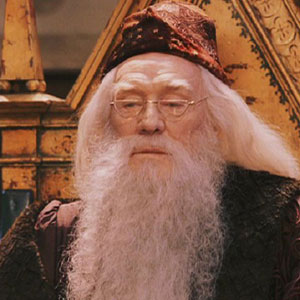
1. Rabindranath Tagore - Duh, obviously. I'd be shivering and extremely nervous, but it would all be worth it if I could just tell him how much his poems and essays have delighted me. His physical appearance always makes me think of Tagore as Albus Dumbledore. I imagine that he would be wise, excellent at conversation and patient enough to put up with less intelligent mortals like yours truly.


2. J.K Rowling - This is the woman who has made me connect everything I see and everything that happens around me to Harry Potter. Notice the Albus Dumbledore reference above. I grew up with Ms.Rowling's boy wizard, made so many wonderful friends because of Harry Potter and discovered the absolute thrill of reading a good book. I would also ask her the recipe for the perfect Butterbeer.

3. Jane Austen - Granted my manners would probably shock Miss Austen and I would possibly not immediately understand any sarcastic remark she directs at me. But to be in the company of such a glorious writer would be amazing. I promise to not freak her out startle her by being the crazy fangirl that I am. I shall also limit references to Mr.Darcy. He exists. Enough.

4. Nayantara Sahgal - It's getting tougher to not be my fangirlish self because Ms. Sahgal is one of the Indian writers I absolutely adore. I shall interview ask her about all the trivia she can remember related to her uncle Jawaharlal Nehru (who I'd invite as well if I weren't so intimidated), her cousin Indira Gandhi and indeed about how it felt living in the British Raj and later, independent India. I shall also congratulate her for one of my most favourite book titles ever: Prison and Chocolate Cake.

5. Basharat Peer - I know he's written only one book so far but it was one of the most heart-breaking ones I've ever read. By the end of Curfewed Night, I wanted to tell the author how incredibly emotional it had been to read his book. Plus, to write about such a personal issue with such elegance and brutal honesty is incredible, and I want to thank him for that.


6. Jasper Fforde - Because I adore insanely creative people - emphasis on the creative part. I loved Fforde's Thursday Next series and though I haven't read his latest works, I think he's just too witty to exclude from any list that refers to authors and conversations.

7. Alex Von Tunzelmann - I really liked Indian Summer: The Secret History of the End of an Empire and though it's not my all-time favourite book or anything, I simply loved Von Tunzelmann's flair for the interesting minor details that makes history so very special. Plus, we have several common interests: India, Partition, pre-Independence drama, the British Raj, Nehru, Jinnah, Patel, the Mughals. Yeah, you get it. Loads to talk about! I also enjoy reading her reviews of period films.

This is such an eclectic guest list. I'm making up for the great disappointment of not being able to go to the Jaipur Literature Festival by dreaming up the list of authors I'd love to talk with. What's your list? :)

Monday, January 10, 2011

Serious Men - Manu Joseph

Rating: 9.5/10

Review:
I've been waiting to read Serious Men for ages. I saw nothing but good reviews, and judging from his articles, I knew I would like to read Manu Joseph's book. This is a book that does not get bogged down because of the hype. Serious Men is a fantastic satirical tale of two men: Ayyan Mani, a Dalit who has had enough of being looked down upon and leading an unremarkable life, and his Brahmin boss Arvind Acharya, a remarkable scientist whose power and authority receives a severe blow after a scandal. 

Through them, Joseph sketches a shatteringly realistic portrayal of modern day India, her people and the idiosyncrasies of science. The book is also a blunt reality check of the influence of the 'c' word - caste - on the minds and politics of the people. The two characters upon whom this novel rests are incredibly three dimensional and are developed with several shades of grey. 

Ayyan Mani wants the glory that he feels was denied by the upper caste Brahmins to his ancestors, who were treated as Untouchables. He starts playing a dangerously exciting game by building a web of lies to present his son as a celebrated 'genius'. The more popular his son becomes, the more dangerous the game is. Ayyan Mani is definitely one of the most complex, memorable characters I've ever read. He's an underdog who can stoop to any level to achieve what he wants. There are sudden flashes of sympathy, affection, even compassion, but all of these emotions are secondary to Mani's ambitions of giving his family a good future, no matter what.

Arvind Acharya isn't as original a character as Mani, but is constructed with such skill that you can picturise Acharya sitting across you and pondering about the big questions of the Universe. In the hands of a less talented writer, this book could have been boring. But Joseph is, quite simply, a treat to read. His dark sarcasm, even darker humour and dispassionate assessment of Indian society are bound to stay with the reader for long. Joseph is an amazing observer who describes the little things that we often shrug away, to make the larger point. 

I would read just about anything he writes because he possesses the rare talent of recreating harsh realities, stripped of the fluff, and doing so without being pretentious. To the very sensitive reader, many parts of this tragic satire could be controversial or shocking. This is not a perfect book - some of the final portions of the book were a little too convenient, there weren't many fully-fleshed female characters. But this is far too important a book to ignore.

Joseph's treatment of Ayyan Mani did remind me of Booker winning writer Aravind Adiga's characterisation of his protagonist Balram Halwai. Both of these characters are underdogs who have been the recipients of the worst of what India has to offer. But Ayyan Mani is more complex, entirely too fascinating - sometimes scary, sometimes saddening.  

There are whole passages of sheer brilliance. I started marking the good quotes and stopped after a while, because I didn't want a book full of dogears. Joseph's exquisite turn of phrase and easy yet vivid writing style makes him an author who is a joy to read. I'm including a couple of my favourite lines from a very quotable writer:

'In the twilight that was now the colour of dust, in the fury of horns that was a national language because honking had telegraphic properties..'

'The dedication of passwords was the new fellowship of marriage. To each other, couples had become furtive asterisks.'

'And one day, very soon in fact, Adi would be an adolescent. An adolescent son of a clerk. A miserable thing to be in this country. He would have to forget all his dreams and tell himself that what he wanted to do was engineering. It's the only hope, everyone would tell him. Engineering, Adi would realize, is every mother's advice to her son, a father's irrevocable decision, a boy's first foreboding of life.'

'On the pavement by the side of the road was planted a banner two storeys high. Even in the blow-up the celebrity appeared stunted. He stood in a safari suit, his palms joined in greeting. His face was a light pink because poster artists did not have the freedom to paint his face black. His little mop of hair was spread thinly over an almost flat scalp. And his thick moustache had sharp edges. Just above his head was an English introduction in large font - DYNAMIC PERSONALITY. A thinner line that followed said he was the honourable Minister S Waman. It seemed appropriate that it was at Waman's black shoes the author took credit, in Marathi and in diplomatically-chosen small font - 'Hoarding Presented by P.Bikaji'. 

'A mysterious character of UFOs is that they are sighted only in the First World,' she said, 'and no alien conquest of Earth begins until the mayor of New York holds an emergency press conference. When Mars attacks, it attacks America.'

Serious Men is a remarkable book. It's not the kind of book that you read, review and forget. It's the kind of book that you yearn to discuss, debate, analyze and always remember. Indian literature will be proud of another amazing new entrant to its ranks, an author who can rip apart the double standards of society to provide the raw and very real picture. 

Needless to say, I'm adding Serious Men to my India - Book Recommendations.

P.S Apologies for the length of the review. I just couldn't resist adding all those great quotes.

LinkWithin

Related Posts with Thumbnails
Protected by Copyscape Online Plagiarism Test