Wednesday, August 10, 2011

An Irony To Remember: Passports before Partition

I've always believed that one of the most fascinating things for a history buff is to spot and acknowledge the many ironies in history. Not just because they give us a chance to compare and contrast, but because they give us an idea of how much we have derailed from what many of our ancestors took for granted. These ironies also provide us a guiding light, if we show the courage to remember and learn from the past.

The history of the partition of British India and the birth of the two nation states of India and Pakistan is one that is littered with remarkable stories and ironies. Here's one that I'd like to share:

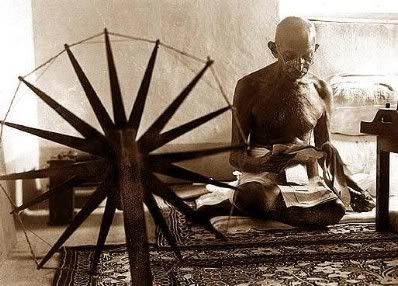
To quote Mahatma Gandhi is a national obsession of sorts, and not without reason. Everyone eagerly quotes the need to 'be the change' and not take 'an eye for an eye', to 'hate the sin and love the sinner'. However, some Gandhi quotes seem less sacred than others, even when they are arguably more significant. In fact, perhaps because they are more significant and slightly more inconvenient. Case in point:

“I do not consider Pakistan and India as two different countries. If I have to go to the Punjab, I am not going to ask for a passport. And I shall go to Sind also without a passport and I shall go walking. Nobody can stop me.”
[Collected Works of Mahatma Gandhi, Speech at Prayer Meeting, 16th June 1947]

The India-Pakistan border is today one of the most dangerous borders in the world and boasts of rigorous, strict visa regimes on both sides. The two neighbours have fought several wars and are deeply distrustful of each other. Indeed, it is hard to reconcile the fact that anyone could have ever thought of going to Sindh from Delhi without a passport. And before people dismiss this as the rantings of a disappointed old man, it is important to point out that Gandhi wasn't the only one to think so.

"In the summer of 1947 few could appreciate the full connotations of the division which would ultimately result in some of the harshest border regulations in the world; indeed one newspaper headline read ‘Passport rules believed to be needless at present’ [The Great Partition, Yasmin Khan]

Strange and quite overwhelming for those of us born long after independence, on either side of the border, to imagine this was even considered possible. The horrors of Partition are vital to understanding India and Pakistan. But equally important is the need to understand sentiments that prevailed in the lead-up to August 1947 and how Independence, Partition and its aftermath changed them.

Friday, August 5, 2011

Imagine this scenario

You are a British judge who agrees to draw the line that will, in essence, partition the two sensitive regions of Bengal and Punjab through the Boundary Commission and thereby create the maps of India and Pakistan. 

You've never been to India and you're landing in India only to decide how to divide her best. Apparently, the British Government in India thought this was a smart idea since it proved your neutrality. But how can you decide to partition an area you've never even visited? They had an answer: maps. 


So imagine yourself using the 20th century equivalent of Google Maps to draw the borders of new countries. That's sort of what happened. It would have been a fun thing, to take a pencil, ponder over a map and draw a line where you think is best. But sadly, this was all too real and all too serious, where a flick of the pencil and a line drawn slightly slanted, gave birth to conflicts and disputes that exist till date. A rather dubious, slipshod way for two new nation states to be born, boundaries decided by a man who has never even visited the villages his Line broke into parts.

Now let's see the material at your disposal to help you decide which regions go to which country: a census that was six years out of date. At a time when small populations had already moved from place to place, rendering any census quite irrelevant.

And oh, your decision will impact about 88 million people at that time, and thousands thereafter. No pressure. 

As you thank your lucky stars that you never were in that awful position, here's the name of the man who was: Sir Cyril Radcliffe. The man who gave his name to a line that partitioned India and Pakistan, the Radcliffe Line. 


Wiki informs me that Sir Cyril Radcliffe refused his salary of 40000 rupees after seeing the mayhem occurring on both sides of the boundary that was created by him. The least he could do, I would imagine, after the guilt of that rather thankless job.

{Radcliffe line facts found in Yasmin Khan's The Great Partition: The Making of India and Pakistan are predominantly used here}

Recommended Reading: Drawing the Indo-Pakistani Boundary by Lucy Chester.


This is the first in what I hope will be a series of posts about Partition and the Indian struggle for Independence,  as India and Pakistan get ready to celebrate their independence days.

Thursday, July 14, 2011

Major Pettigrew's Last Stand - Helen Simonson

Rating: 9/10

Review:

Every once in a while there comes a book which tackles serious, crucial issues in a seemingly effortless fashion, with heart and elegance. Major Pettigrew's Last Stand is one such heart-warming tale. Set in the beautiful English countryside, in the village of Edgecombe St. Mary, this is the story of a 68 year old retired English Major falling in love with the charming 58 year old Pakistani shopkeeper Mrs.Ali. 

As the two find companionship, friendship and love, we realise theirs is no ordinary love story. It is one that is trapped in the conflict of rigid traditions and suspicion on either side, multiculturalism facing its litmus test in the face of subtle yet piercing racism.

Helen Simonson writes like a dream; a dream that brings to life the quaint countryside and the quirks and eccentricities of its people with great wit and charm. Major Pettigrew and Mrs.Ali, united by the loss of their loved ones, their love of literature, make a fascinating couple. The Major is very much a traditionalist (he cannot bear to hear his son use the Royal family as the punchline of a joke), chivalrous, sarcastic and quite hard to dislike. In many a way, Major Pettigrew might be the older version of the oft-referred quintessential 'English gentleman'. Simonson paints a character who despite his stereotypical dislike of certain things/people (his son's American girlfriend whom he initially dislikes mostly for just the fact that she's an American), will grow to accept and adore them once he gets to know them better. 

Mrs.Ali is a wonderful character: a staunch liberal, she firmly believes in making her own decisions, is unfailingly  polite but won't put up with the disdain of others.  The Major and Mrs.Ali are the kind of people who would make wonderful dinner guests: charming, courteous and most likely to provide intelligent conversations on everyone from Kipling to Johnson.

What makes Major Pettigrew's Last Stand special is how beautifully it focuses on the simple joys of life, while delving into complex issues of immense importance: the multicultural experience, how the British society reacts to people who hail from former colonies, racism. Simonson is a delightful, incredibly witty, very quotable writer who handles sensitive themes such as multicultural relationships, falling in love after 60 with understated elegance and respect. Her exquisite turn of phrase is captivating:

'Garden gates and driveways gave glimpses of well-stocked gardens and thick lawns studded with clover clumps and dandelions. He liked the clover, evidence of the country always pressing in close, quietly sabotaging anyone who tried to manicure nature into suburban submission' 

Comparisons with Jane Austen ,which is what drew me to this book in the first place, are  justified, for Simonson makes sparkling satirical observations on society. Indeed Austen would be proud of this line:

'When true love combines with clear financial motive, all objections must be swept away' 

Major Pettigrew's Last Stand is a triumph for how skilfully it interweaves the customs of an English village with the warmth and tensions that come with the breeze of multiculturalism in modern day Britain. As Mrs. Ali points out so beautifully in my most favourite book quote in a long time, 'A couple may have nothing in common but the colour of their skin and the country of their ancestors, but the whole world would see them as compatible.' 

Reading this book is as pleasant as drinking endless cups of your favourite blend of tea. If you're in the mood for a tale that demolishes the notions that all 'feel good' stories are light and frivolous, this is the best choice. Major Pettigrew's Last Stand is sure to brighten your day.

[P.S I've heard there are talks going on for making this book into a movie. I'm looking forward to it, for this story should lend itself beautifully to adaptation for the screen!]

Sunday, July 3, 2011

Mohandas: A True Story of a Man, his People and an Empire - Rajmohan Gandhi


Rating: 10/10

Review:
Mohandas Karamchand Gandhi is omnipresent today: the most recognised Indian in the world and a mandatory reference name for almost everyone speaking of peace. You can find him peering at his people from crisp Indian money notes, looking down from portraits in government offices, smiling from T shirts and flairs, repackaged for a new generation, and quoted so often that it would probably make him dizzy.

The simplistic saintly Mahatma (Great Soul) of our textbooks, is a depiction that does no justice to the immense complexities and controversies that Mohandas Gandhi faced and overcame. For what makes Gandhi so great is not the fact that he was flawless. Gandhi's place among the most unforgettable men of the millennium came from the fact that he was greater than the flaws that he tried valiantly to overcome. The Mahatma is an outstanding example of the greatness that human beings can aspire to.

Rajmohan Gandhi's magnum opus biography of his grandfather Mohandas is a stunning, beautiful, unforgettable, emotional passage to understanding Bapu, one that takes your breath away as it reveals the sheer magnitude of what Gandhi lived through and achieved.

Mohandas' childhood in Gujarat, where he grew up watching his mother fast on religious occasions, where his nurse Rambha taught him to recite the holy name of Lord Rama whenever he was nervous, where he resolved that he would go out of his way to make Muslim friends, even if he didn't make many Hindu friends, is far more important than people probably think. As we can see, events of his childhood instilled the beliefs that would inspire him while leading a nation. 

A fashionable Mohandas went to London to study to become a barrister. Vegetarianism, agnosticism, love and respect for friends of different cultures and religions enchanted him. He wanted all citizens of the Empire to be treated equally and many aspects of the English way of life inspired him.

But it was South Africa that marked the biggest turning point of his life. As Nelson Mandela would later say, “You gave us Mohandas; we returned him to you as Mahatma Gandhi”. Facing up to racism and injustice to the Indian community in South Africa, the lawyer Mohandas wrote to newspapers opposing unjust laws and traditions.  And more importantly, protested and mobilized several people to protest non-violently. Tolstoy farm, where 'untouchables', people of many religions and countries would live and work together, was a big inspiration for Gandhi. Traits of what India would see Gandhi present to her as solutions to long-suffered problems, are visible already. 

India soon called for her prodigal son and his return to his homeland changed India forever. Travelling third class to discover the real India, Gandhi was clear of the three issues he would focus on: Hindu-Muslim unity, bridging the shameful gap between upper caste Hindus and 'untouchables' and preparing the country, from the villages, to be worthy of freedom.  These were issues that would haunt India in the lead-up to Partition and he was prescient enough to understand that very early. Satyagraha and ahimsa became his 'weapons' of choice, as he rejuvenated a party of elite lawyers and urged the Congress to really represent the millions who toiled in the villages of India.

The political Gandhi was born out of necessity. For there was little social and religious reform he could do without sorting out the politics of India. Gandhi was the hero of Champaran, the  initiator of non-cooperation, the controversial creator of Quit India, the exquisite strategist, publicist of the Dandi March. A prolific letter writer, Gandhi wrote regularly for his newspaper Harijan, mentored Nehru, Patel and the top brass of the Congress: his political 'sons' and wore just the minimum of hand-spun cloth in solidarity with the masses of India, many of whom had nothing to wear.

His experiments with brahmacharya/celibacy (which sometimes involved sleeping naked beside women of his ashram) are no doubt as bizarre and controversial now as they were then, when Gandhi made no attempt to hide it. His usage of religion in politics has been criticised by some, but he understood the importance of religion in every walk of life in India and used it to spread only one message: that all religions preached love, tolerance and goodwill.

What makes the Mahatma incredible is not just the space and respect he gave to those who disagreed with him, but the earnest effort he made to understand their point of view and even change his opinion if need be. His conversations with  Tagore and Ambedkar are a case in point. That Gandhi practised what he preached, is what attracted the world to him. He was the change he wished to see in the world, even if the change he wanted to see, was different from what others wanted to see. Gandhi specialised in holding a high moral ground by loving his enemy. 

Churchill, who with great sensitivity asked the Viceroy when the Mahatma was fasting, if Gandhi hadn't died yet, spoke of blood, toil, tears and sweat. So did Gandhi. Except, he spoke of blood, sweat and tears shed by a man who toiled and protested with great courage, non-violently. After all, 'non-violence is a weapon of the strong'.

Even if people had thought him distant and out-of-sync with reality, it was Gandhi who healed some of the many wounds of Partition. Fasting for peace, especially when Delhi was in the throes of horrifying Partition violence, was his ace card of sorts. While Dandi and Quit India might have become the most popular expressions of Gandhi and his triumphs, his greatest moment, without a doubt, came while visiting areas tormented by religious violence.

Be it Noakhali, Bihar, Delhi or Calcutta, wherever Bapu (Father of the Nation) went, he cured the insanity of communalism, he healed wounds with his overwhelming humanity, he spoke the language of love to those who had seen devastation on a scale that would crush India. He made Hindus, Sikhs and Muslims who attacked and killed members of the other community repent and promise him that they would protect each other always. His prayer meetings where chants from all religions were recited, whispered peace to ears that had been plugged by the shattering noise of violence. And such was his impact. Sample this excerpt from the book:

Interviews conducted in Noakhali in  April and November 2000 (53 years after Gandhi had been there) found residents retaining precise memories of Gandhi...many recalling him spontaneously recited or sang 'Raghupathi Raghav Raja Ram..Ishwar Allah Tere Naam'

Rajmohan Gandhi writes with a neutrality that is incredible for a man writing about his grandfather. His writing is simple, evocative and poignant, quoting from myriad sources, interpreting and drawing parallels with great sensitivity and shedding light on the lesser known aspects of Gandhi's life, such as the troubled relationship that Gandhi had with his sons. Rajmohan captures the legendary sense of humour of the Mahatma, as also his relationship with the men who would go on to govern India. Mohandas: A True Story of a Man, his People and an Empire is a masterpiece that every Indian ought to read and I have no hesitation in saying that Bapu would be very proud of his grandson's work.

Incessant tears poured down my cheeks throughout the last pages of the book, the ones dealing with Gandhi's assassination and the world's response to it. In death as in life, Gandhi united Hindus, Sikhs and Muslims, both in India and Pakistan. Indians wept in grief and normal life was forgotten, for 'the light has gone out of our lives and there is darkness everywhere'. Many Pakistanis skipped their meal that night, to mourn the loss of a remarkable human being. Said Pakistani leader Mian Iftikharuddin, "Each one of us who has raised his hand against innocent men, women and children during the past months, who has publicly or secretly entertained sympathy for  such acts, is a collaborator in the murder of Mahatma Gandhi"

If I had to condense the life of Mahatma Gandhi, three words would do it: he loved everyone. That overwhelming, incredible, majestic, ever-flowing love for men, women, children; Harijans, Muslims, Hindus, Sikhs; Englishmen and women, Germans, Americans, Africans. The world was his family and he couldn't stand a single act of violence that would harm his family. And that reasoning, is possibly why 'generations to come will scarce believe that such a one as this ever in flesh and blood walked upon this earth.'   To all those protesting peacefully in every part of the world for what is right, be it during the recent 'Arab Spring' or under the guidance of Martin Luther King Jr, Aung San Suu Kyi or Nelson Mandela, Gandhi's message is worth remembering: 'My life is my message'. This book is an unforgettable journey to understand that message.

Friday, June 24, 2011

Reader, Writer, Reviewer: Mahatma Gandhi

I quite believe in judging people by the books they read. And when it comes to great personalities, understanding their reading tastes and the books that inspired them, goes a long way in helping us understand these men and women.


I'm now reading Rajmohan Gandhi's brilliant biography of Mahatma Gandhi: Mohandas: A True Story of a Man, his People and an Empire. Of all the many remarkable things about this great man's life, what strikes me is the importance that he gave to books and how much they influenced his life and ideas. Gandhi was a great reader whenever he found the time for it: for instance especially when he was imprisoned (He read thirty books in the three months he was jailed in Pretoria, South Africa)

Mohandas Gandhi's first trip abroad was to study in London and the young man was anxious to understand himself and what he actually believed in, when confronted by those of different cultures and habits. Books helped him immensely in this pursuit. Henry Salt's A Plea for Vegetarianism, which Gandhi says he read 'from cover to cover' helped him become a vegetarian by choice. [Remember here that the teenager Gandhi had once believed that the puny, vegetarian Indian couldn't stand up to the meat-eating British man]

A Gandhi toying between atheism and all religions, Hinduism in particular, read Helena Blavatsky's Key to Theosophy, Edwin Arnold's translation of the Bhagavad Gita, The Song Celestial (a book he would recommend all his life as the best English translation of the Gita) and Arnold's book on the Buddha, The Light of Asia. Ever-fascinated to get to know different religions, Gandhi also read the Bible and George Sale's translation of the Quran.

His love and respect for Leo Tolstoy's writings, that would influence him enough to name his 'ashram' in South Africa Tolstoy Farm, began with reading  'The Kingdom of God is Within You' which Gandhi says overwhelmed him.

Sometimes, Gandhi sought refuge in books and great writers to see the arguments against and approval for some of his ideas. His interest in the works of Henry David Thoreau who he called 'one of the greatest and most moral men America has ever produced' is a case in point. Thoreau's statements on civil disobedience seemed to Gandhi to confirm and approve of his belief in satyagraha.

In a prison reading spree that would be a recurrent feature of his reading life, Gandhi read the following books during a two month imprisonment in South Africa: Thomas Carlyle's Lives of Robert Burns, Samuel Johnson and Walter Scott, Francis Bacon's Essays, Plato's Socrates. He later read Edward Carpenter's 'very illuminating' book Civilization: Its Cause and Care and also read Charles Dickens' David Copperfield 'with avidity'.


Perhaps no book captivated him as much as John Ruskin's Unto This Last. He resolved to put to practice the 'social equality and simple life' presented by the book, and bought a farm in Phoenix to reside with his family, friends and other members of the Indian community in South Africa.

Gandhi's own book Hind Swaraj (Indian Home Rule), put into words his long-held ideas of self-rule, civilization and how Indian civilisation is embedded with the concept of non-violence. He acknowledges in his preface to the book the inspiration that he received from reading Tolstoy, Ruskin, Thoreau and Emerson. Leo Tolstoy, with whom Gandhi was now corresponding, wrote back having reading Hind Swaraj, that the book was 'of great importance not only for India, but for the whole of humanity.'

In a rather remarkable trial in India (that deserves a post of its own), Gandhi was sentenced to six years in prison for 'inciting disaffection towards His Majesty's Government' in 1922 in the aftermath of the tragedy of Chauri Chaura. In Yeravda jail, Gandhi read a brilliantly diverse set of books sent by friends or from the jail library, devoting six hours a day for reading.  

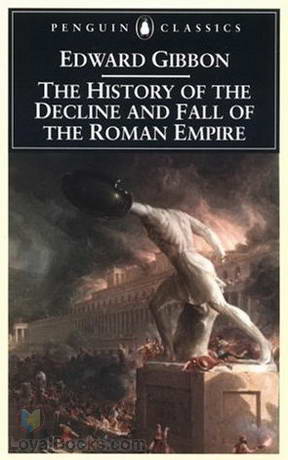
He read Edward Gibbon's The History of the Decline and Fall of the Roman Empire, Kipling's songs of Empire, the Mahabharata, Plato, Jules Verne, Macaulay, Shaw, Walter Scott, Faust, Tagore, Wells, Woodroffe, Dr.Jekyll and Mr. Hyde; histories of Scotland, of the Sikhs, of India, of birds, of cities; biographies of Pitt, Columbus, Wilberforce, Paul of Tarsus, Kabir; several Christian, Muslim and Buddhist books and a series of Hindu texts; writings of Vivekananda, Dayananda Saraswati, Aurobindo and Tilak.

Writes Rajmohan Gandhi of the Mahatma's varied reading list: 'The Empire's Challenger is thus also, in his mid -fifties, a scholar with an appetite'. Gandhi sometimes also reviewed books for his newspapers, notably Katherine Mayo's controversial book Mother India about India's 'insanitation and other defects' where she claimed 'The drains are India'. Gandhi notes that the book was 'cleverly and powerfully written' and that it is 'a book that every Indian can read with some degree of profit'.

India's 'Father of the Nation' was a reader, writer and a book reviewer too; always open to understanding different, even extreme, opinions and weighing them with his beliefs, never afraid to learn from them. The books he read influenced his ideas, his policies, and it wouldn't be too much of a stretch to say they ended up influencing the nation and the world. 

Monday, June 20, 2011

Library Tales - The Incomplete Reader

After the library of which I have been a member for more than 5 years decided they could not only be petty, but also remain unapologetic to a long-time customer regarding a mistake made by their staff, I thought I had had enough.

Libraries are far more personal to me than the 'it's just business, we don't really care about you' staff of my previous library can imagine. Going to the library is a trip I always look forward to, making lists in my mind of what books I should look for, saying a little prayer that the book I had long awaited would finally be there for me to take home. And when people make it an unpleasant interaction, well, it's not worth my money.

"Here is where people, one frequently finds, lower their voices and raise their minds" 
- Richard Armour

Therefore, a new library with a fantastic collection of books was found. An interesting experiment has begun, because I chose a temporary membership for a couple of months. This means I cannot borrow books and take them home, but I can read any book I want at the library, leisurely, all day long.

I, who is so used to snuggling on to the couch, lying on my bed, book in hand, a cup of tea beside me, have had to learn to sit up straight in those sturdy chairs.

I, who is so used to throwing down my book on my sofa and walking a few paces to take in a major plot twist, has had to sit and stare at the book and utter a sigh, at most.

I, who is so used to picking any book, whenever I want, has had to understand the knack of picking smaller books that can be finished in one sitting. Or choosing huge reference books and taking notes from them.

I have also started learning the art of putting a half-finished book in a shelf where I hope none of the full-time members will find it and take it home. Placing the book in the lowest shelf, in the belief that people will be too lazy to bend down, was a big fiasco. It meant that I had read the charming Miss Pettigrew Lives For A Day, for, well, just a day.

There's something rather adventurous about this temporary membership; a far cry from the safe predictability of reading at home. Sure, it is incredibly annoying when the book you loved reading yesterday is missing today and your reading experiences are more incomplete than ever.

But having people immersed in books around you, jotting down notes furiously, lips moving silently with a book of Keats' poetry in hand, is a rather wonderful thing to see. I'm ever fascinated to see what everyone around me is reading (which is one of the reasons I love book blogging and Goodreads). Sometimes, seeing a wide smile on a person's face as their eyes drink in the pages of a book, is as lovely as reading a good book myself.

Wednesday, June 15, 2011

A Common Man and Partition

Fikr Taunsvi writes of Lahore in the traumatic months leading to Partition. A chilling account of what the common man went through, while life-changing decisions were made in Delhi and London:

'The washerman who lived on the ground floor...had become the father of a tiny baby at three in the morning and..was worried that the bazaars were shut. The sweet-seller who sold milk had locked his shop from inside and was hiding there. He had received no supply today because all milk-vendors are Muslim and this being a Hindu locality, they couldn't step into it. Hospitals were not functioning, neither were doctors, nurses and medicines, and both the mother and the infant were crying. The children were asking, 'Will the curfew never be lifted? Shall we never get milk?'...I wish you had the strength to ask great brains like Jawaharlal Nehru, Jinnah and other statement and maulvis to wear the guise of this unlettered washerman for a moment. Then you may go request the British to give you freedom. Then demand Pakistan and Hindustan'

These are the real voices of Partition, voices that tell the story of their times, of an event that changed their lives and that of their country, voices that lived through the traumatic possibility of becoming aliens in their own home. It's time we stopped reading only the political and diplomatic version of Partition. The real story of the birth of India and Pakistan lies with the people.

{Taunsvi's quotes are excerpted  from Yasmin Khan's brilliant book The Great Partition: The Making of India and Pakistan}

LinkWithin

Related Posts with Thumbnails
Protected by Copyscape Online Plagiarism Test